
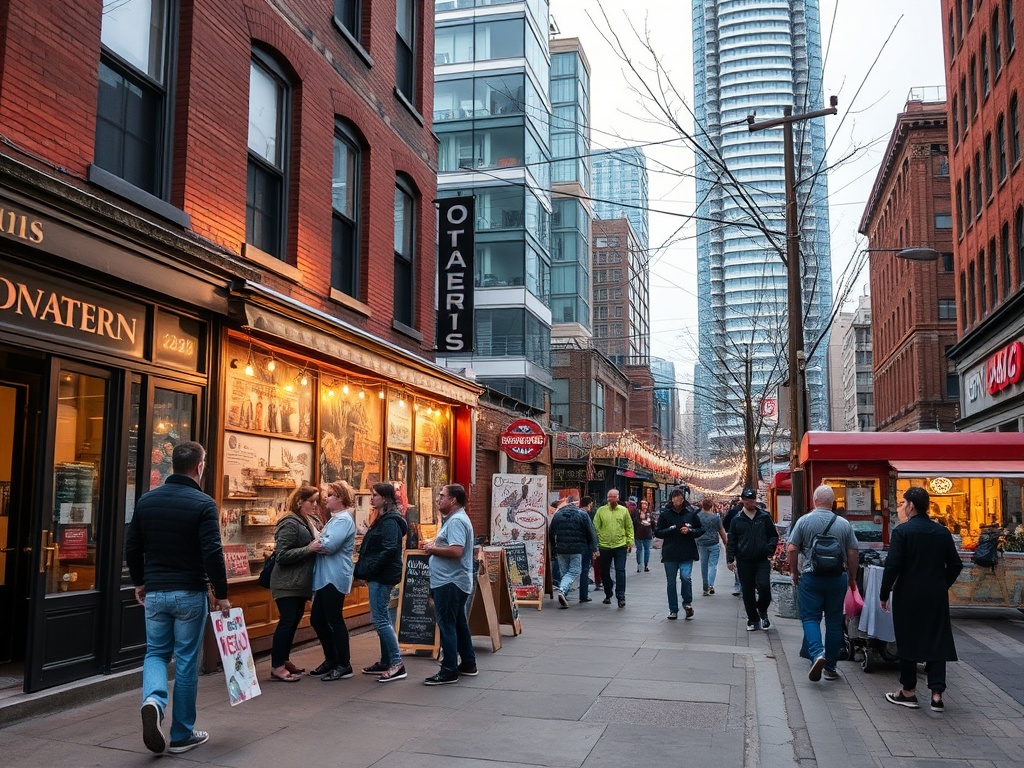

Urban Art Meets Innovation: The Rise of Pop-Up Galleries in Toronto
Toronto has long been a mosaic of cultures, ideas, and artistic expression. But in recent years, a bold new trend has taken root in the city’s vibrant neighborhoods: pop-up art galleries that transform ordinary streets into immersive cultural hubs. These ephemeral spaces are redefining how art is experienced, breaking down the walls—both literal and symbolic—between creator and community.
What Makes Pop-Up Galleries So Unique?
Unlike traditional galleries, pop-up installations are temporary, mobile, and often experimental. They can appear overnight in alleyways, storefronts, or even shipping containers. Their purpose? To shake up conventional art spaces and connect more directly with the public. Here’s what sets them apart:
- Accessibility: No dress code, no entrance fees—just art on the street.
- Diversity: A platform for emerging and underrepresented artists.
- Community Engagement: Interactive exhibits that invite participation.
- Urban Revitalization: Breathing life into neglected spaces.
Neighborhoods Leading the Movement
From Queen West to Kensington Market, certain districts in Toronto have become hotspots for these pop-up experiences. In Queen West, a former warehouse now hosts rotating exhibits by local muralists and digital artists. Meanwhile, in The Annex, an abandoned bookstore was recently transformed into a two-week exhibition on Afro-Caribbean identity in Canada.
These projects not only bring art closer to people’s daily lives but also reflect the rich cultural fabric of each neighborhood. The beauty lies in their spontaneity: you never quite know when or where the next one will appear.
Art as Dialogue: Beyond the Canvas
Pop-up galleries in Toronto are more than visual feasts—they’re platforms for dialogue and social reflection. Many feature themes like climate change, Indigenous sovereignty, and gender identity. One installation, for example, used augmented reality to explore the legacy of residential schools in Canada, inviting viewers to engage with the past in an emotionally resonant way.
These initiatives often collaborate with local advocacy groups, creating a bridge between art and activism. According to a report by the Canada Council for the Arts, such collaborations are essential to fostering inclusive artistic ecosystems in urban spaces.
Meet the Creators Redefining the Scene
Layla Chen: Architect of the Unexpected
Trained as an architect, Layla merges spatial design with digital projection to create immersive pop-up environments. Her recent work, installed in a downtown parking garage, transformed concrete walls into a living forest, complete with motion-reactive visuals and soundscapes.
Jayden Clarke: Hip-Hop Meets Fine Art
Jayden fuses street culture with classical techniques. In his pop-up series “Verses & Vignettes,” he paints portraits of Canadian hip-hop legends over vintage maps of Toronto districts. His installations are often accompanied by live performances and spoken word sessions.
Pop-Up Galleries as Economic and Cultural Catalysts
Beyond their artistic value, these temporary spaces also have measurable impacts on local economies. Cafés, bookstores, and boutiques in the vicinity often report increased foot traffic during gallery runs. According to Brookings Institution research on the creative economy, such cultural events can significantly boost urban vitality and social cohesion.
Moreover, they offer a low-barrier entry point for artists to showcase their work, often leading to further opportunities and collaborations. This democratization of art is not just a trend—it’s a movement.
Where Culture and Streets Collide
Toronto’s pop-up galleries are more than fleeting spectacles—they’re statements. They challenge the status quo, celebrate diversity, and invite everyone to take part in the evolving story of Canadian culture. As the city continues to grow and change, these grassroots initiatives are ensuring that art remains not just relevant, but revolutionary.
So next time you’re walking down a familiar street, look again. You might just stumble upon a portal to a whole new world of expression.
Read next: Things to Do in Montreal with Kids: A Decision-Ready Family Guide