
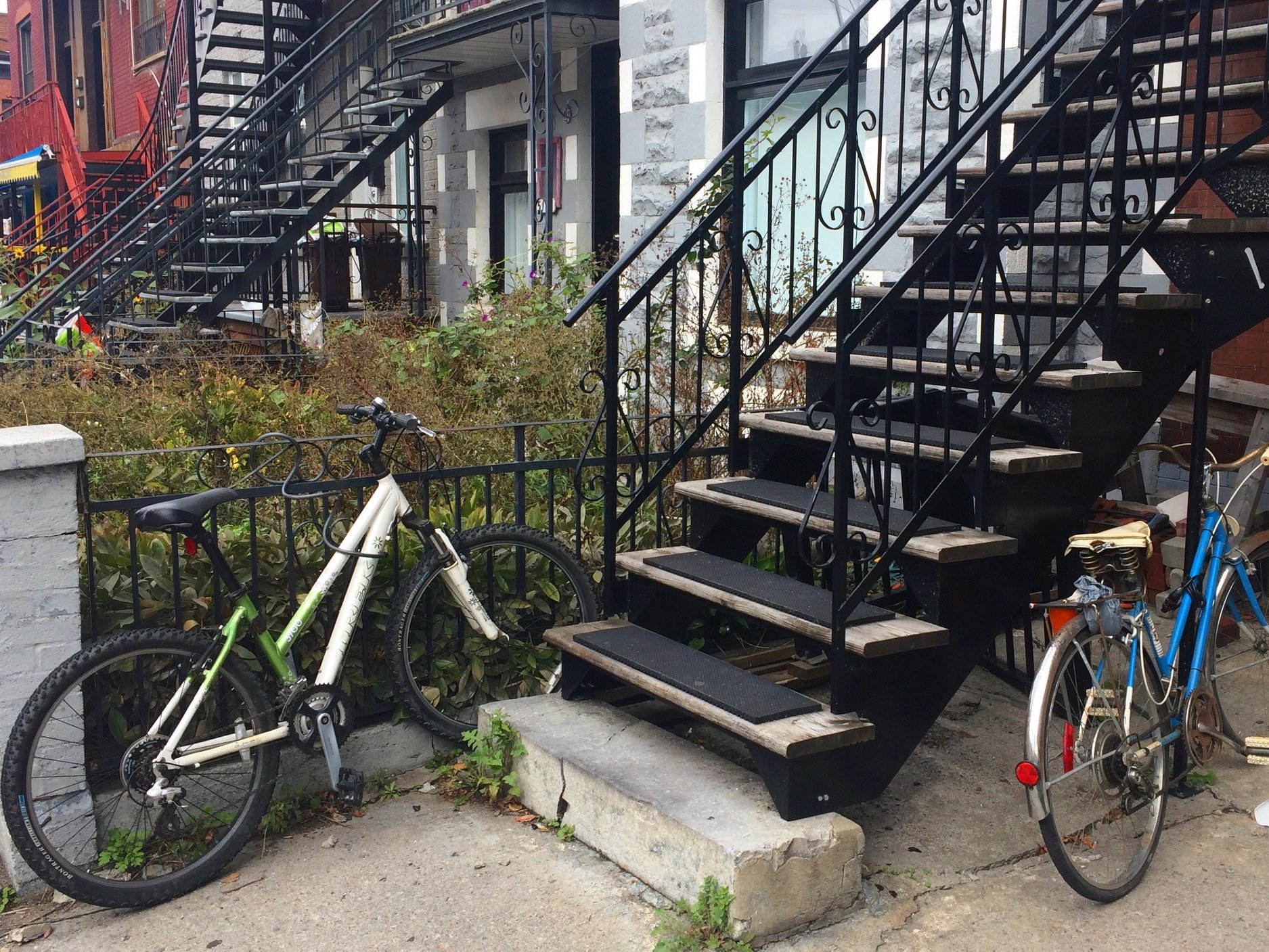

Mile End is a small neighbourhood in Montreal’s Plateau-Mont-Royal borough, and it earns its reputation through music venues, publishers, galleries and a few famous bakeries packed into a walkable grid. It is still a working creative district, though rising rents have pushed some artists and small businesses out. This guide explains the boundaries, the cultural background and how to spend a weekend there.
Where exactly is Mile End, and how do you get your bearings?
Mile End has no official borders, which surprises many first-time visitors. Informally, the area runs from Mount Royal Avenue in the south to Van Horne Avenue in the north, and from Hutchison Street in the west to Saint Denis Street in the east.
The name comes from a crossroads that appears on nineteenth-century maps, where Saint-Laurent met what is now Mont-Royal Avenue. Today the neighbourhood is organized around a handful of streets, and learning them makes planning easy.
- North to south: Saint-Laurent Boulevard, Clark, Saint-Urbain, Waverly, Esplanade, Jeanne-Mance and Park Avenue.
- East to west: Mount Royal, Villeneuve, Saint-Joseph, Laurier, Fairmount, Saint-Viateur, Bernard and Van Horne.
For a first visit, pick one east-west street, such as Saint-Viateur or Bernard, and walk it end to end before cutting across to Saint-Laurent or Park Avenue. Most of what you came for sits within a few blocks of those intersections.
Why did Mile End become a creative district?
Since the 1980s, the neighbourhood has been known as an artistic enclave, home to musicians, writers, filmmakers and designers. By 2005, several music magazines were describing it as the heart of the city’s independent music scene, and it has kept that standing since.
Several kinds of institutions hold that scene together, and knowing them helps you decide where to spend your time.
- Venues: Medium-sized rooms on Saint-Laurent Boulevard and Park Avenue, including Casa del Popolo, La Sala Rossa and the Théâtre Fairmount, shaped the local sound. Some past venues have closed, a reminder that the scene is fragile.
- Labels and studios: A number of independent record labels and recording studios are based in the neighbourhood, along with the headquarters of the Pop Montreal festival.
- Publishing: The comics publisher Drawn & Quarterly was founded here in 1989 and opened a flagship store on Bernard in 2007, now regarded as the literary hub of the area.
- Public spaces: A former Anglican church on Park Avenue became a library in 1993 and was renamed the Mordecai Richler Library in 2015. Its conversion helped open the door to a community art movement with local exhibitions.
- Digital industries: A computer graphics software house renovated part of an old clothing factory in 1993, and in 1997 the space became a game developer’s Montreal studio, which has since taken over the whole building.
The writer Mordecai Richler grew up on Saint-Urbain Street in the 1930s and 40s and wrote about the area in several novels, so the neighbourhood also carries a literary layer that predates its indie-music fame.
Is Mile End still affordable for artists?
Not entirely, and it helps to go in with a clear picture. Mile End became noticeably gentrified during the 1980s and 90s, and rents have kept rising while shops become more upscale, especially along the Laurier West strip.
A number of small businesses have closed or relocated as rents have risen, notably on Bernard Street and Saint-Viateur Avenue. In a gesture of support for an old bookstore on Saint-Viateur that was at risk of closing, residents brought their favourite books to the shop. The store eventually closed anyway. Much of the artist community and many lower-income residents have since moved toward Park Extension and other neighbouring areas.
What does that mean for you as a visitor? Mile End is best understood as a creative district under pressure rather than a frozen museum. Spending your money at independent venues, record shops, bookstores and cafés is the most direct way to support what remains. It also means that any specific shop you read about may have changed, so check current hours and status before building a day around one address.
The neighbourhood is also popular as a filming location. It has stood in for New York City on American productions, and the borough announced restrictions on new shoots in the area it described as the heart of Mile End. If you stumble on a closed-off block, that may be why.
What does a weekend in Mile End look like?
Think in three layers: food, browsing and evening entertainment. Walking is the only sensible way to cover it.
Morning: bagels and coffee
Two bakeries here are famous across the city: Fairmount Bagel and St. Viateur Bagel. Both make Montreal-style bagels, thin and covered in sesame seeds, rolled by hand and baked in wood-fired ovens, and both are reported to stay open around the clock. Which one is better is an old local debate, so try one from each and decide for yourself. For a sit-down lunch with literary history, Wilensky’s Light Lunch, still open on Fairmount at Clark, appears in Richler’s novel The Apprenticeship of Duddy Kravitz and in the film based on it.
Afternoon: shops and green lanes
The area has a strong cluster of vintage clothing shops, including Citizen Vintage on Saint-Laurent, Annex Vintage at Saint-Viateur and Clark, and Local 23 at Bernard and Clark. A jeans warehouse on the strip rewards patience if you are willing to wade through the stock and wait for a fitting room. Add a stop at the Drawn & Quarterly store on Bernard for comics and books.
Between shops, look for the ruelles vertes, former back lanes converted into green space to build community among residents and reduce the presence of cars. Montreal has an estimated 69 kilometres of them, and several are in Mile End, including the stretch behind Park Avenue between Saint-Joseph and Laurier, and the block just north between Laurier and Fairmount. If you want more open space after a day on pavement, Mount Royal Park is the natural next step, a green escape above the neighbourhood.
Evening: music, theatre and games
Casa del Popolo serves coffee by day and turns into a busy bar at night, with programming that ranges from comedy and spoken word to live music. During the Suoni Per Il Popolo festival, these rooms become especially busy, so plan ahead if your visit overlaps. The Rialto Theatre on Park Avenue at Bernard, a National Historic Site of Canada that has served the area since 1924, hosts live music and stand-up in a richly decorated interior. For something less formal, Ping Pong Club at Saint-Laurent and Bernard draws crowds on Friday and Saturday nights with table tennis, other games and cocktails.
How should you plan your visit?
A few practical decisions will shape how much you enjoy it.
- Choose your anchor. Decide whether the main draw is music, food, shopping or books, then build the day around one street. Trying to cover everything leads to rushed visits.
- Check programming first. Venues change their lineups often, and a few have closed over the years. Look up what is on before you commit to a night.
- Go on foot. The grid is compact, and the ruelles vertes and side streets are where much of the character sits.
- Leave room for gaps. Independent shops can keep irregular hours, and some businesses have disappeared because of rent pressure. Have a backup nearby.
- Spend locally. Buying a book, a record or a coffee from an independent shop does more for the neighbourhood than any amount of photo-taking.
Finally, remember that Mile End is a residential neighbourhood as well as a destination. Keep noise down on side streets late at night, and treat the ruelles vertes as the shared community spaces they are.
Frequently asked questions
What are the boundaries of Mile End?
They are informal. Mile End is generally placed between Mount Royal Avenue and Van Horne Avenue from south to north, and between Hutchison Street and Saint Denis Street from west to east. It sits in the Plateau-Mont-Royal borough.
What is Mile End best known for?
It is known as an artistic neighbourhood with a strong independent music scene, galleries, boutiques and cafés. Two of Montreal’s best-known bagel bakeries, Fairmount Bagel and St. Viateur Bagel, are also based here.
Is Mile End still a good place to see live music?
Yes. Venues such as Casa del Popolo and La Sala Rossa are still part of the local scene, and the Rialto Theatre hosts live music and comedy. Some past venues have closed, so confirm current listings before you go.
What is a ruelle verte?
It is a back lane converted from a drivable passage into green space. The goal is to build a sense of community among residents and reduce the effect of cars in the urban landscape.
Related reading
- Montreal’s Nightlife Reinvented by Underground Art Collectives
- How Vancouver’s Food Markets Drive Creative Community Energy
Sources
- 27 Best Things to Do in Montreal’s Mile End (timeout.com, accessed 2026-11-02)
- Mile End, Montreal — Wikipédia (en.wikipedia.org, accessed 2026-11-02)
Photo: 20181013 – 07 – Montreal (Mile End), by Andre Carrotflower, CC BY-SA 4.0 (Wikimedia Commons)

Read next: What to See in Montreal: A City That Rewards Slow Looking