
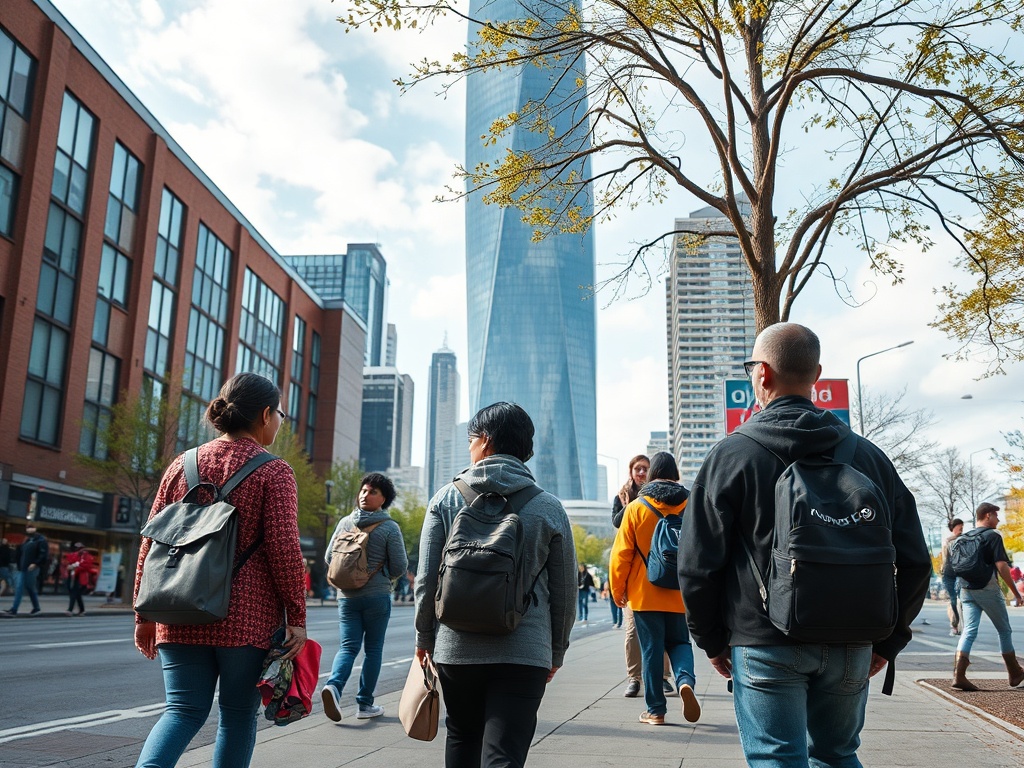

Urban Canada: A Living Mosaic in Transformation
Canada has long celebrated its multicultural identity, especially in its bustling urban centers like Toronto, Vancouver, and Montreal. However, as cities evolve and new generations redefine what it means to belong, the traditional narratives surrounding multiculturalism are being challenged.
Today, a new wave of artists, community leaders, and everyday citizens are pushing for a deeper, more authentic expression of cultural plurality—one that goes beyond passive coexistence and leans into active collaboration and mutual transformation.
From Coexistence to Co-creation
Multiculturalism in Canada has often been framed as a peaceful coexistence of different ethnic groups. But in the creative hubs of urban Canada, a shift is underway. Young Canadians from diverse backgrounds are not just preserving their heritage—they’re fusing it with others to create something entirely new.
Take, for example, the rise of fusion food trucks in Vancouver that blend Punjabi spices with Korean street food techniques, or the Montreal art collectives where Haitian, Québécois, and Arab influences converge in vibrant murals. These aren’t just aesthetic experiments—they’re political, personal, and deeply Canadian.
The Role of Second-Generation Voices
Second-generation immigrants are at the forefront of this shift. Straddling two (or more) worlds, they often become cultural translators and innovators. Rather than choosing between identities, they’re weaving them together to form new expressions of urban Canadian life.
This new approach to identity has been termed “third space culture” by academics: a space where hybrid identities flourish, and where the boundaries of culture become more fluid. It’s not about fitting in—it’s about transforming the space to reflect who you are.
Challenges of Tokenism and Representation
Despite these innovations, many urban communities still face systemic issues. Token representation in media, politics, and public discourse can often reduce complex identities to stereotypes. True multiculturalism requires more than visibility—it demands equity, voice, and participation.
- Access to funding for culturally diverse arts remains uneven.
- Urban planning often overlooks the needs of minority communities.
- Media narratives still center dominant cultural perspectives.
As noted by the CBC in a recent report on urban diversity in Toronto, there’s a growing demand for institutions to move beyond performative inclusion and actively reshape their structures to reflect the country’s real demographic makeup.
Culture as Resistance and Renewal
For many communities, culture is not just a celebration—it’s a form of resistance. In the face of gentrification, discrimination, and erasure, urban cultural projects become safe spaces and platforms for activism. Whether it’s spoken word poetry in Ottawa’s community centers or Indigenous hip-hop in Winnipeg, these expressions reclaim space and identity.
Urban festivals like Caribana in Toronto or MURAL Festival in Montreal are not just entertainment—they are acts of visibility, memory, and pride. They remind cities of the histories that built them and the futures they must embrace.
Looking Ahead: A Bold New Urban Identity
Canada’s urban cultures are no longer content with static definitions of multiculturalism. They are dynamic, intersectional, and unapologetically bold. As younger generations continue to shape the cultural fabric of cities, we can expect even more innovation—more blending, more challenging of norms, and more calls for equity.
According to Britannica’s exploration of multiculturalism, societies that embrace deep intercultural dialogue tend to foster richer, more resilient civic life. Canada’s urban centers are on that path—messy, vibrant, and full of promise.
The future of multiculturalism in Canada’s cities isn’t about preserving the past—it’s about co-creating what’s next. And that future looks bold, inclusive, and endlessly creative.