
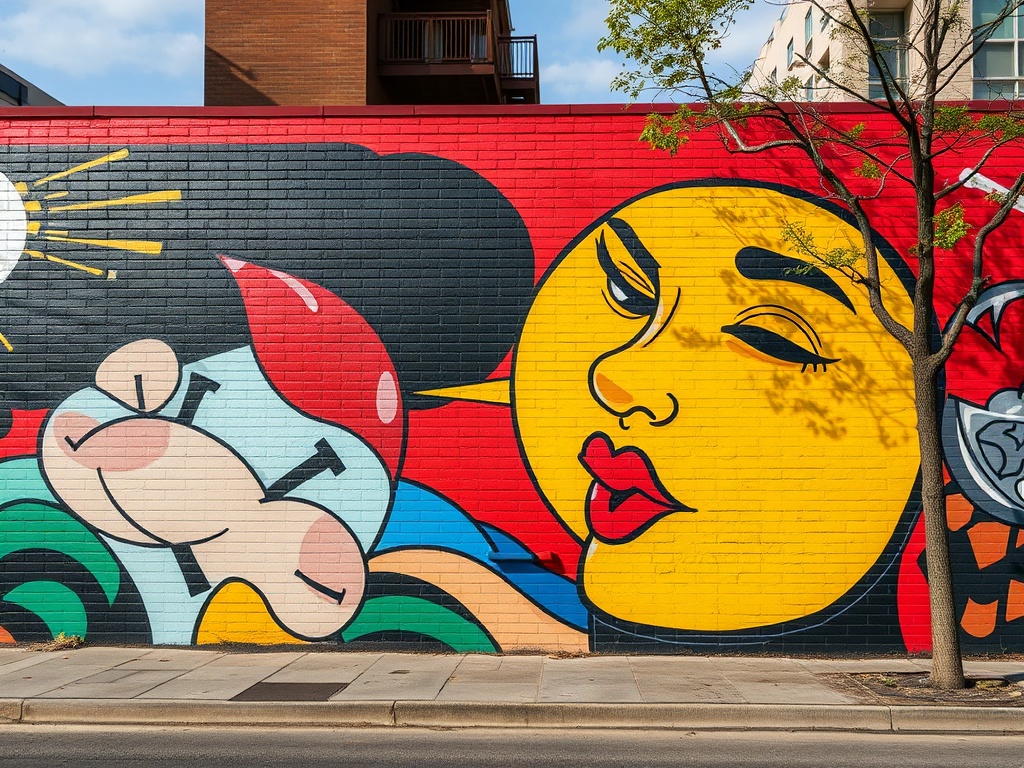

A Colorful Revolution on Urban Walls
Across Canada, the once-grey facades of downtown buildings are being transformed into vibrant canvases. From Montreal’s Plateau-Mont-Royal to the alleys of Vancouver’s Mount Pleasant, street murals are no longer just background decoration—they’re becoming cultural statements, giving Canadian cities bold new visual voices.
These expansive works of art do more than beautify; they reflect stories of identity, resistance, and imagination. In a country as diverse as Canada, murals have emerged as a public platform for underrepresented voices, offering a fresh perspective on what it means to be Canadian today.
Artists Redefining Urban Identity
Canadian muralists are pushing boundaries, often blending techniques from graffiti, fine art, and Indigenous symbolism. Artists like Shalak Attack and Ola Volo infuse their works with myth, memory, and multicultural motifs that speak to a shared yet complex heritage.
According to the Canadian Heritage department, public art initiatives are increasingly being supported through grants and municipal programs, reflecting a growing recognition of their cultural importance.
Key themes explored in recent murals include:
- Indigenous resilience and storytelling
- Environmental awareness and climate urgency
- Urban diversity and neighborhood pride
- Social justice and collective memory
Murals as Community Catalysts
Beyond aesthetics, street murals are transforming how neighborhoods function and feel. Projects like Toronto’s StreetARToronto or the MURAL Festival in Montreal are not only turning streets into galleries—they’re fostering community engagement and economic revitalization.
Research from the U.S. National Endowment for the Arts indicates that public art can enhance community cohesion and even reduce crime rates. In Canada, similar trends are being observed. Residents often report a stronger sense of belonging and civic pride when murals are introduced into their neighborhoods.
Global Influence, Local Soul
While Canadian muralists draw inspiration from global street art movements in places like Berlin, Mexico City, and São Paulo, they remain deeply rooted in local narratives. The result? A unique visual language that celebrates Canada’s multiculturalism while addressing its contradictions.
For instance, in Winnipeg’s West End, murals depict scenes from Filipino, Ukrainian, and Métis communities, creating an evolving visual archive of the city’s immigrant and Indigenous histories. As described in an article by National Geographic Travel, these murals serve as both tourist attractions and cultural signposts.
Challenges Behind the Paint
Despite their growing popularity, murals still face practical and political challenges. Weather conditions, vandalism, and bureaucratic red tape can all hinder public art projects. Additionally, debates around gentrification and cultural appropriation often arise, especially when murals are commissioned without authentic community involvement.
To address these concerns, many cities are adopting more inclusive curation processes, involving local artists and residents from the start. This ensures that the art truly reflects the community’s voice, not just a sanitized version of it.
The Future is on the Wall
What does the future hold for Canada’s urban murals? With the rise of digital mapping, augmented reality, and interactive installations, the mural scene is poised for even greater innovation. But at its core, the movement remains about connection: connecting people to place, history to present, and art to everyday life.
As Canadian cities continue to evolve, their walls are speaking louder than ever—telling stories that are bold, diverse, and undeniably alive.