
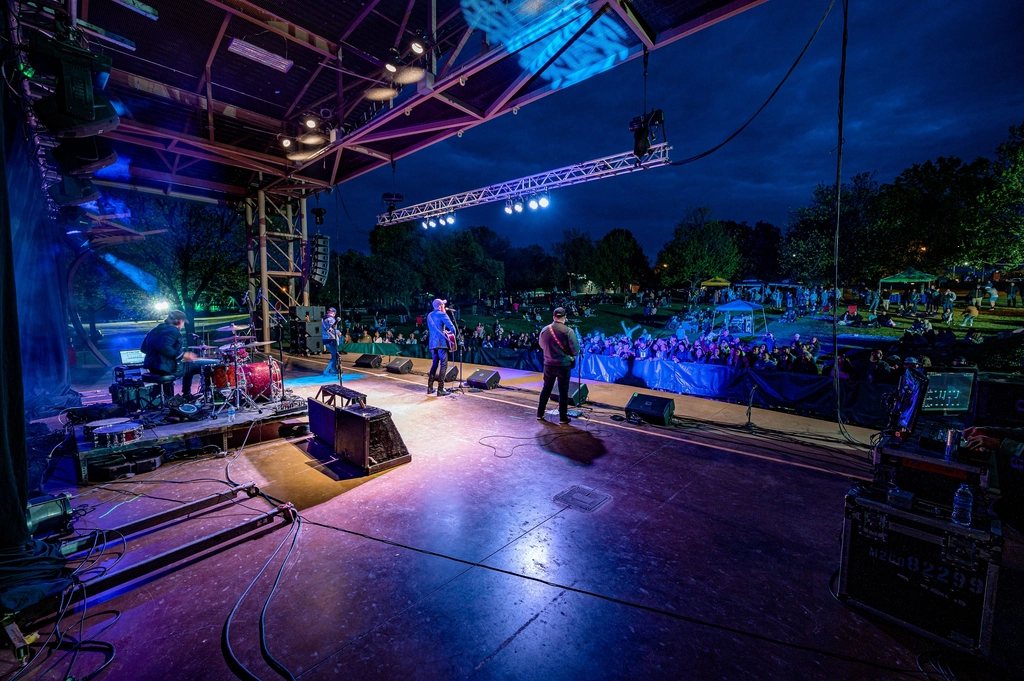

The first thing you notice is the lighting. A church basement in Montreal’s Mile End, a Legion hall off Gottingen Street in Halifax’s North End, a community centre gym in Toronto’s east end: none of them were designed for a show, and all of them are lit like a bake sale. The second thing you notice is the crowd. Half of it is too young to drink, and nobody cares. We have been going to these shows again this year, and we think they are the healthiest thing happening in Canadian music.
For most of the last fifteen years, the small-venue circuit in this country ran through bars. That made sense for the bars. It also meant that anyone under nineteen in Ontario, Nova Scotia or British Columbia, or under eighteen in Quebec, Alberta and Manitoba, was locked out of the rooms where a scene actually forms. A generation of musicians grew up watching their own city’s bands on a phone screen because the door would not let them in.
How the bar became the gatekeeper
The economics are simple and unkind. A room that sells alcohol can pay a sound tech, a door person and a headliner out of the bar take, which means the promoter can risk a low ticket price. A room that does not sell alcohol has to pay all of that from the door alone. Provincial liquor licensing then adds the final turn of the screw: a licensed venue that admits minors usually has to stop serving, rope off a section or hire extra staff, and most owners decide it is not worth the trouble.
So the all-ages show migrated to wherever the rent was low and the licence was absent. In the early 2000s that meant lofts and warehouse spaces, especially in Montreal, where cheap industrial square footage made the city a DIY capital. Then insurance, fire inspections and rising rents closed most of those rooms, and for a while there was nothing in between the bar and the arena.
The basement, the hall and the gym
What has filled the gap is older than the loft: the institutional room that a neighbourhood already owns. Churches in Montreal’s Plateau and Mile End, many of them with congregations that have shrunk to a few dozen, rent their basements for a modest fee to anyone who will leave the floor clean. Legion halls across Halifax and Dartmouth have a stage, a kitchen and decades of experience hosting loud events for people who do not agree on much. Community centres in Toronto’s Parkdale, Scarborough and the Danforth have gyms that can hold two hundred people and a rental desk that treats a punk show like a badminton tournament.
These rooms bring three things a bar cannot. The rent is usually a flat fee rather than a percentage, so a show that sells out actually pays the bands. The hours are early, which suits both the teenagers and the neighbours. And the space belongs to nobody in the scene, which turns out to be an advantage: no owner’s taste, no house band, no regulars who resent the kids.
Licensing and noise: the two walls
None of this is frictionless. A church basement show in Montreal still runs into the borough’s noise bylaws, which in most of the central boroughs set decibel limits at the property line and get stricter after eleven at night. A community hall in Toronto that admits the public for a paid event may need a special occasion permit, an occupancy count and proof of liability insurance, all of which cost time and a little money. Halifax has spent the last several years arguing with itself about a live-music policy that would treat small venues as cultural assets rather than nuisances, and the argument is not finished.
The organizers we have watched handle this in a few consistent ways. They keep shows early, typically doors at six and lights on by ten, which sidesteps most late-night noise complaints. They keep the fees transparent, posting the door price and where it goes. They talk to the neighbours before the first show rather than after the first complaint. And they treat the permit process as part of the work, not an insult to it.
Why the under-nineteen crowd is the whole point
A music scene is not a set of venues. It is a pipeline. Someone at fifteen sees a band from their own school district play a real show with real amplifiers, decides that is possible, and starts one. If the first live show that person can legally attend happens at nineteen, the pipeline loses four years, and those are the four years when most people either pick up an instrument or do not.
The all-ages room also changes the audience’s behaviour, and we mean that as a compliment. A crowd that is not drinking listens differently. It arrives on time, it faces the stage, it buys the cassette, and it goes home talking about the opener.
There is a further point that the music industry tends to miss. The under-nineteen crowd is the only audience that grows. The teenagers in the church basement tonight are the thirty-year-olds buying tickets in 2036, and the scene that builds them is the scene that survives.
Three cities, three versions
Montreal’s version leans on the Plateau and Mile End church stock and on a francophone and anglophone crowd that mixes more freely in a basement than it does almost anywhere else in the city. Toronto’s version is scattered, which is both its weakness and its strength: a gym in Scarborough, a hall on Dundas West, a rec centre near Coxwell, each with its own tiny promoter and its own crowd, held together by group chats rather than a single address. Halifax’s version is the most compact, a cluster of halls and community rooms in the North End and across the harbour in Dartmouth, where a fifteen-minute walk covers the entire circuit and everyone recognizes everyone.
What the three have in common is the folding chair. It is stacked against the wall at the start of the night, pulled out for the parents in the back, and put away by the same kids who moved the drum kit. That small act, cleaning the room you did not build so you can use it again, is the whole ethic of the thing.
What we would like to see next
We would like cities to notice. A municipal grant that covers insurance for community-hall shows would cost less than a single festival stage and would do more for the local scene. A noise bylaw that distinguishes between a 10 p.m. hall show and a 2 a.m. bar patio would be common sense. And a listing, even a simple one, of the public rooms a promoter can rent, with the fees and the rules stated plainly, would save every new organizer the same three months of phone calls. That is where the next Canadian band is playing tonight, and the door is open to everyone.