
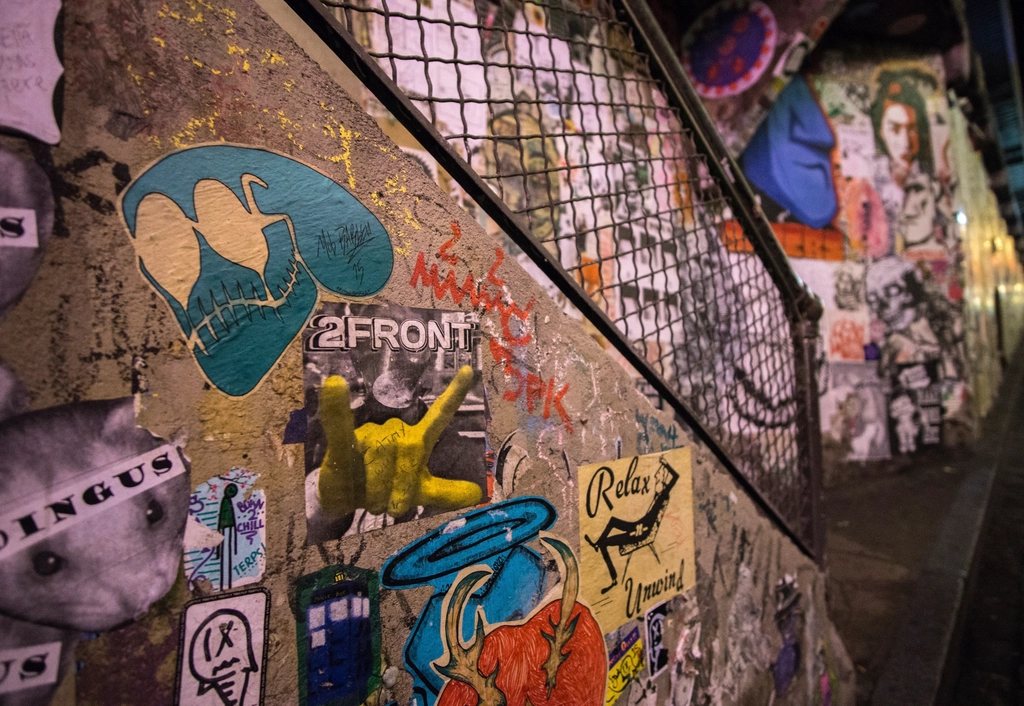

Every Canadian city has a front and a back. The front is the street: the address, the porch, the parking spot, the thing the tax assessor photographs. The back is the alley, and for most of the twentieth century it was where the garbage went. Somewhere in the last twenty-five years, in Toronto and Montreal especially, the back became the interesting side. We have spent a good part of this summer walking it, and we have come away with more questions than the postcards suggest.
The scale is bigger than most residents realize. Toronto has roughly 2,400 public laneways, adding up to about 250 kilometres of narrow asphalt, most of it in the older grid between the lake and St. Clair. Montreal’s boroughs count their alleys in the thousands as well, with the densest network in the Plateau-Mont-Royal, Rosemont-La Petite-Patrie and Villeray, where the triplex blocks were built with a service lane down the middle. Neither city planned any of this as public space. Both are now treating it that way.
The alley as gallery
Toronto’s most photographed alley runs for about three blocks behind Queen Street West, between Spadina Avenue and Portland Street. It has been a de facto outdoor gallery since the late 1990s, and it has gone through the full cycle: illegal, tolerated, celebrated, then folded into the city’s mural programme and the tourist map. On a Saturday afternoon it draws more cameras than most of the galleries on the street it sits behind.
What interests us more are the quieter versions. Garage doors in the Junction, Leslieville and Kensington Market painted by whoever lives there, usually with the owner’s blessing and sometimes without. Montreal’s alleys in Villeray and Hochelaga carry the same energy on brick rather than steel. The work in these places is not curated, which is the point.
Montreal’s ruelles vertes, by the rules
Montreal has done something Toronto has not: it has turned the alley into a formal programme with a name. The ruelle verte, or green alley, dates back to the late 1990s and runs through the city’s eco-quartier network, borough by borough. By the early 2020s there were more than five hundred of them, most in the central boroughs, and the count keeps rising by a few dozen a year.
The mechanics matter, because they explain who owns the thing. A ruelle verte begins with the residents. A group of neighbours forms a committee, canvasses every household whose property backs onto the alley, and needs a clear majority of signatures before the borough will consider the application. The borough then removes some asphalt, adds planting beds, sometimes installs bollards or a partial closure to through traffic, and hands the alley back. From that point on, the neighbours water, weed, shovel and mediate. The city built it; the block keeps it.
Some ruelles go further and become ruelles blanches in winter, kept open for sledding and skating rather than plowed for cars. Walk through the Plateau in February and you can find a lane where the only tracks are from toboggans. It is what happens when a dozen households decide that the space behind their homes belongs to them collectively.
Toronto builds instead
Toronto’s answer to the alley has been architectural rather than horticultural. Since 2018 the city has allowed laneway suites, small self-contained dwellings built on the rear of a lot facing the lane, in most low-rise residential zones. The idea was gentle density: a rental unit or an in-law flat where a garage used to be, without changing the street side of the block. Several hundred have been built or approved since, and they are changing the feel of the lanes where they cluster, mostly in the west end and along the Danforth.
A laneway suite brings eyes on the alley, which the safety literature has praised for decades. It also brings a front door, a mailbox and a resident who has strong opinions about the mural on the garage next door. The alley that used to be nobody’s becomes somebody’s, and that shift cuts both ways.
Who actually maintains an alley
This is the part that the celebratory coverage skips. Municipal crews in both cities plow and repair alleys as a low priority, well after the streets. In Toronto, laneway snow clearing is on the residents unless the lane meets a width and length threshold, and many do not. In Montreal, a ruelle verte’s planting beds are the committee’s responsibility by written agreement, and when the committee’s founding members move away, the beds tend to go to seed within two summers.
So the answer to who maintains the alley is: whoever cares enough that season. We have seen ruelles in Rosemont that look like a botanical garden and, two blocks over, one where the planters are full of cigarette butts and the mural has been tagged into illegibility. The difference is rarely money. It is usually one or two households who took the job seriously and whether they still live there.
Charm, and what it costs
Here is the tension we cannot walk past. A green alley raises the value of the properties along it, and a painted alley raises the profile of the neighbourhood around it. That is the intent, and it works. The Plateau’s ruelles were pioneered by tenants and small owners in the 1990s, when the borough was cheap; the same alleys now back onto some of the most expensive triplexes in the city, and many of the households that planted the first beds have been priced out of watering them. Toronto’s laneway suites, sold as affordable infill, rent at rates that reflect the cost of building a new house from scratch on a lot with no street access.
None of this means the projects were wrong. It means charm is not free, and that the people who create it are often not the people who get to keep it. We would like to see both cities acknowledge that in their programmes. A few concrete moves would help:
- Tie ruelle verte and mural funding to a maintenance commitment that survives a change of ownership, so the alley does not decline when the founders leave.
- Treat laneway suites as rental housing with the same protections as other units, rather than as a premium product.
- Fund borough and ward crews to take over the plowing and basic upkeep of alleys that have been formally converted to public use.
- Keep the uncurated alleys uncurated. Not every lane needs a plaque.
The back of the city, kept
We keep returning to a single alley off Saint-Denis where a neighbour has painted a garage door every summer for at least a decade, always a different scene, always with the previous year’s colours still visible at the edges. It tells you more about how a city takes care of itself than any programme brochure: the back of the house is where people do the work they were not asked to do, and the day they stop is the day the alley goes back to being where the garbage went.